Remember that moment at school when you accidentally called your teacher ‘Mum’? Or the time you walked into the wrong meeting room and everyone looked up? Maybe you turned up in green on Blue Day at work. Or got caught eating your sibling’s share of the chocolate cake.
Any one of those moments is enough to make you go beetroot. And if you’ve ever chopped a beetroot, you’ll know exactly why we borrow its name for a blush. A few slices in and even your fingertips are stained pink.
That colour can be fun to play with in the kitchen. Try stirring a pinch of organic beetroot powder into hummus. The first stir leaves a bright pink streak, and a few more turn the whole bowl rosy. It’s the same colour you get from the fresh root, in a form you can add a pinch at a time. And it can do the same for pancake batter or the lemon drizzle on a loaf cake.
So what exactly is in that little spoonful?
What is organic beetroot powder?
Organic beetroot powder is simply organic beetroot that has been dried and finely ground. It keeps the root’s earthy flavour and vivid colour in a form you can whisk into a dressing or mix straight into a batter. We have a few ideas below to get you started -
For the seven ideas below, we recommend you to choose a plain, unsweetened powder and start with the smaller amount suggested. The colour and flavour can vary between brands, so stir it in, see how it looks and tastes, then add another pinch if you like.
1. Swirl it into hummus
Stir ½ teaspoon of beetroot powder into a tablespoon of hummus to make a smooth pink paste, then fold it through the rest of a small bowl. Taste and add a squeeze of lemon if you’d like a brighter flavour. A little ground cumin goes well with the earthy beetroot, too.
For a two-tone dip, stir the paste through just half the hummus. Spoon both colours into the same bowl and run the back of a spoon through them once or twice. Serve with warm pitta, cucumber sticks or crackers.
2. Make a pink yoghurt dip
Mix ¼ teaspoon of beetroot powder into 150 g of plain Greek yoghurt. Add chopped mint, a squeeze of lemon and a pinch of salt. Let it sit for a few minutes, then stir again so the colour is even.
This is especially good alongside spiced potatoes or spooned into a wrap with chickpeas and crunchy cucumber. If you’re having a curry, add grated cucumber and a little roasted cumin to turn it into a quick beetroot raita.
3. Whisk it into a salad dressing
Whisk ¼ teaspoon of beetroot powder into one tablespoon of lemon juice, then add two tablespoons of olive oil, ½ teaspoon of Dijon mustard and a pinch of salt. Taste and add a little honey if you prefer a softer, sweeter dressing.
Try it on a salad of rocket, crumbled feta and walnuts. The sharp dressing works well with salty feta, and the pink looks particularly pretty against pale ingredients such as sliced pears or white beans. Give it another whisk just before pouring.
4. Add it to weekend pancakes
For a batch made with around 125 g of flour, whisk ½ teaspoon of beetroot powder into the dry ingredients before adding the milk and eggs from your usual recipe. Cook the pancakes as you normally would. The cooked sides may brown, while the inside can keep more of the pink tint.
Serve them with yoghurt and raspberries if you fancy something sweet. For a savoury breakfast, use an unsweetened batter and top the pancakes with soft cheese, chopped chives and a twist of black pepper.
5. Stir it into a creamy pasta sauce
While the pasta cooks, mix ½ teaspoon of beetroot powder into 100 g of ricotta. Add a little finely grated lemon zest and black pepper. When the pasta is ready, take the pan off the heat and toss everything together, adding a spoonful of reserved pasta water at a time until the sauce coats the pasta.
This makes enough sauce for roughly two portions. Finish with toasted walnuts or crumbled goat’s cheese. If you have peas in the freezer, add a handful to the pasta pot in the final couple of minutes for a little sweetness.
6. Toss it with roast potatoes
Roast baby potatoes with olive oil and salt until golden and crisp. In a large bowl, mix ½ teaspoon of beetroot powder with two teaspoons of olive oil, a pinch of ground cumin and a little lemon zest. Toss about 400 g of hot potatoes in the mixture just before serving.
Adding the seasoning after roasting gives you more control over the colour and lets the crisp edges show through. Scatter over chopped parsley and bring the bowl to the table while the potatoes are still hot.
7. Tint a lemon drizzle for your loaf cake
Put 50 g of icing sugar into a small bowl and whisk in a small pinch of beetroot powder. Add lemon juice, starting with one teaspoon, then add a few drops at a time until the glaze falls from the spoon in a thick ribbon. Drizzle it over a completely cooled lemon loaf or plain sponge.
A pinch gives you a soft blush. If you want a deeper pink, mix in another pinch before pouring. The lemon keeps the flavour fresh, and a scattering of lemon zest is all the decoration the cake needs.
Frequently asked questions
1. Does beetroot powder make everything taste like beetroot?
The flavour depends on how much you use and what you mix it with. A pinch in lemon icing gives a subtler result than a generous spoonful in plain yoghurt. If you’re mainly after the colour, add it a pinch at a time and taste as you go.
2. Why does beetroot powder sometimes clump?
It can form small lumps when tipped straight into a bowl of thick yoghurt or a finished sauce. Mix it into a spoonful of the wet ingredients first to make a smooth paste, then stir that through the rest. For pancakes, whisk it into the flour before adding liquid.
3. Can I use beetroot powder in hot dishes?
Yes. In dishes such as pasta or roast potatoes, adding it towards the end lets you see the colour and adjust the flavour before serving. In pancakes and other batters, expect the cooked colour to differ from what you see in the mixing bowl.
A Little More Variety in Your Everyday Food
Sometimes, trying a familiar ingredient in a different way is enough to get us curious about food again. The beetroot powder that usually goes into your smoothie might find a place in breakfast, lunch or something you bake at the weekend.
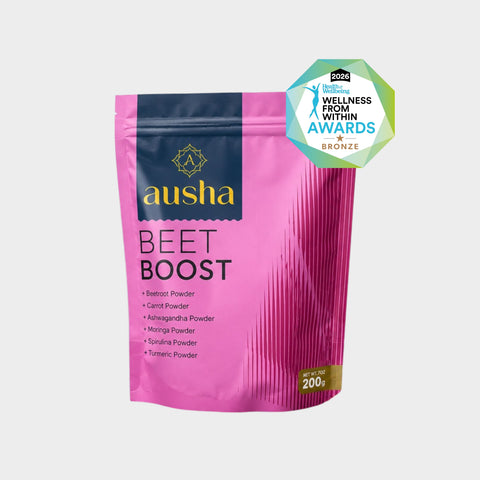
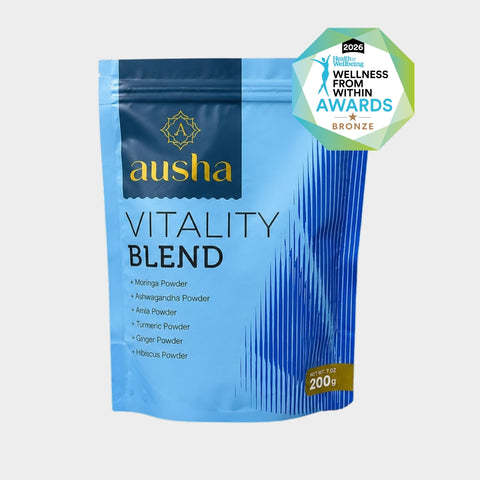
If that curiosity has you looking for a few more ingredients to explore together, Ausha Beet Boost combines beetroot powder, dates powder, hibiscus powder, carrot powder, ashwagandha powder, moringa powder, turmeric powder, spirulina powder, and chia seed - a blend worth trying if you want a bit more variety in one scoop. The dates bring a little natural sweetness, making porridge or yoghurt an easy place to begin.
Start with something you already enjoy eating. When a new ingredient fits comfortably into your day, finding a place for it becomes much easier.
About the Author
Shalini is a writer with a background in technology, content management and business analysis. After several years in the corporate world, she took a career break to focus on her family and is now rediscovering her love for writing — alongside a growing experience and interest in superfoods, nutrition and wellness. Read more about the author →